Capacitor/How it works
Capacitor records each coding-agent session as a durable event stream, then turns it into memory your whole team can draw on. Here’s how one recording becomes replay, recall, review, and evals — and exactly what it captures along the way.
From capture to capability
A coding-agent session normally scrolls away the moment it ends. Capacitor keeps the whole thing — prompts, reasoning, tool calls, and results — as a durable, structured stream. Everything below is what becomes possible once the session is data you can query, not a chat that’s gone.
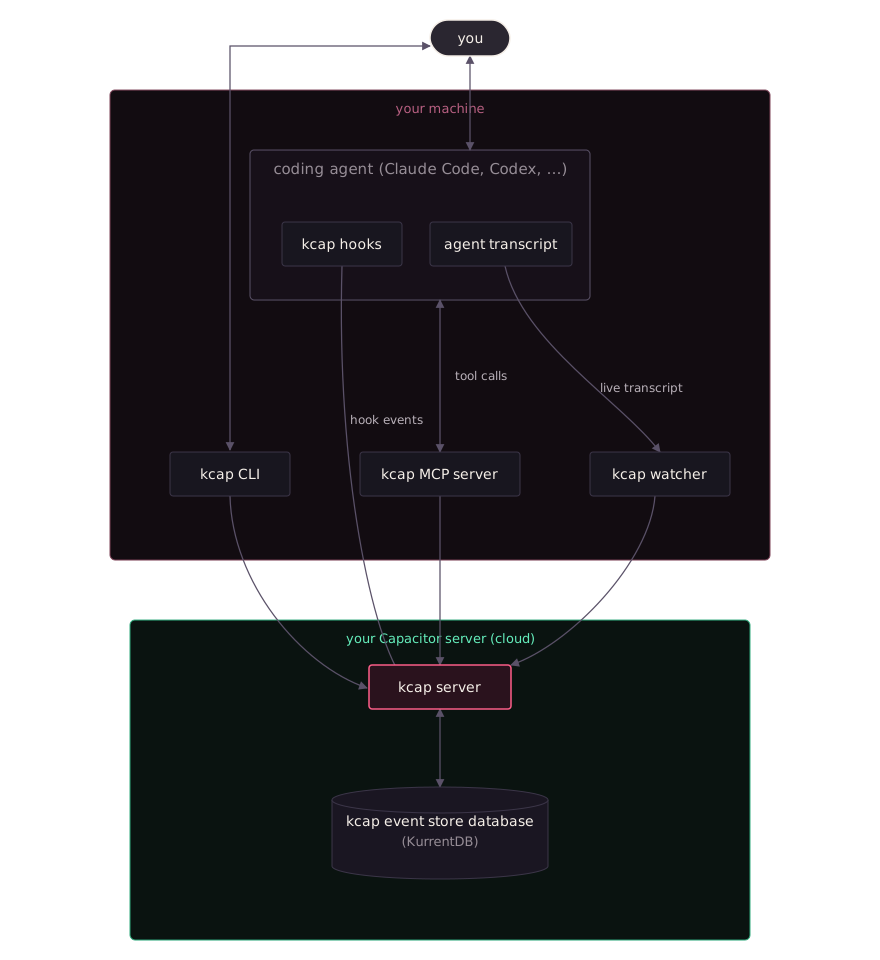
Two moving parts
On your machine
The Capacitor client is open source. It installs hooks into the coding agents you choose, and a background watcher tails each agent’s own transcript file and streams it to your server as the session runs — without changing how you work.
Your Capacitor server (cloud)
A Kurrent-hosted cloud instance, dedicated to your organization. It receives the session transcript, stores each session, and builds the data models behind the dashboard and search — then answers your agents’ queries against them.
What reaches your server
When a session is captured, the watcher sends the complete transcript — everything the agent read, wrote, and reasoned about:
Treat the transcript as sensitive by default. If a prompt or output contains a secret or a proprietary detail, you can delete that session from the server any time.
Where Capacitor stops
Beyond the transcript above, nothing leaves your machine. Capacitor has no access to your filesystem — it never scans or uploads your source tree on its own. The only path to your server is the session transcript you can already see.
kcap ignore path, send nothing at all — the hooks skip them silently.
Go deeper
For the exhaustive, field-by-field list of what is captured — and the exclusions and controls in full — read What Capacitor captures. For the mechanics of hooks, the watcher, and the event store behind it, see System architecture and Visibility & sharing.
Start free in minutes. Capacitor records what your agents actually did — for your team to replay, audit, and discuss. Nothing about how you work changes.
Rather start a conversation? Talk to the team — we’re building with teams that already use coding agents.
Built by the team behind KurrentDB — event streams in production are what we do. Coding agents just produce a new kind.